Paper manufacturing has evolved far beyond basic sheet formation. Today, performance expectations include durability, moisture resistance, surface consistency and suitability for downstream applications. These demands have pushed manufacturers to adopt advanced processing technologies that enhance material properties at scale. Within this context, paper impregnating plants manufacturers have contributed significantly to modernising how treated paper is produced, particularly through injection-based systems that deliver precision and consistency.
Injection impregnation has emerged as a preferred approach because it integrates control with efficiency. Instead of relying on surface-level coating alone, this method enables deeper, more uniform penetration of resins or solutions into the paper structure. The result is a finished product engineered for performance rather than appearance alone.
Understanding Injection Impregnation in Manufacturing
Injection impregnation involves introducing treatment materials directly into the paper web under controlled conditions. This process ensures even distribution across fibres, reducing variability that can occur with conventional methods.
By embedding functional properties within the material itself, manufacturers achieve predictable outcomes that align with strict quality standards.
Why Uniform Penetration Matters
Consistency is critical in industrial paper applications. Uneven treatment can lead to weak points, inconsistent thickness or unpredictable behaviour during further processing.
Injection-based systems address these issues by regulating flow, pressure and absorption, ensuring that every section of the sheet meets defined specifications.
Improved Material Performance
Paper treated through injection impregnation demonstrates enhanced strength, dimensional stability and resistance to environmental factors. These properties expand usability across sectors such as laminates, insulation, packaging and specialty industrial applications.
Performance improvements reduce material failure rates and increase confidence during downstream manufacturing stages.
Precision Through Advanced Machinery
Operational Advantages of Injection Systems
- Controlled resin distribution
- Reduced material waste
- Consistent absorption across fibres
- Adaptability to different formulations
- Improved process repeatability
- Enhanced production reliability
Integration With Modern Production Lines
Injection systems are designed to integrate seamlessly into continuous manufacturing setups. This compatibility minimises disruption while allowing manufacturers to upgrade capabilities incrementally.
Such integration supports scalability without requiring complete process overhauls.
Efficiency and Resource Optimisation
Efficiency extends beyond speed. Injection systems optimize material usage by delivering precise quantities of treatment solution, reducing excess consumption.
This precision lowers operational costs while supporting sustainable manufacturing practices.
Supporting Diverse Product Requirements
Different applications require different performance characteristics. Injection impregnation allows manufacturers to adjust formulation concentration, penetration depth and curing conditions to suit specific end uses.
This flexibility supports product diversification without compromising consistency.
Reduced Process Variability
Manual or less controlled methods introduce variability. Injection-based processes rely on calibrated machinery, reducing dependence on operator judgement.
Lower variability translates to higher batch-to-batch consistency, a critical factor in industrial supply chains.
The Role of Impregnation Machines
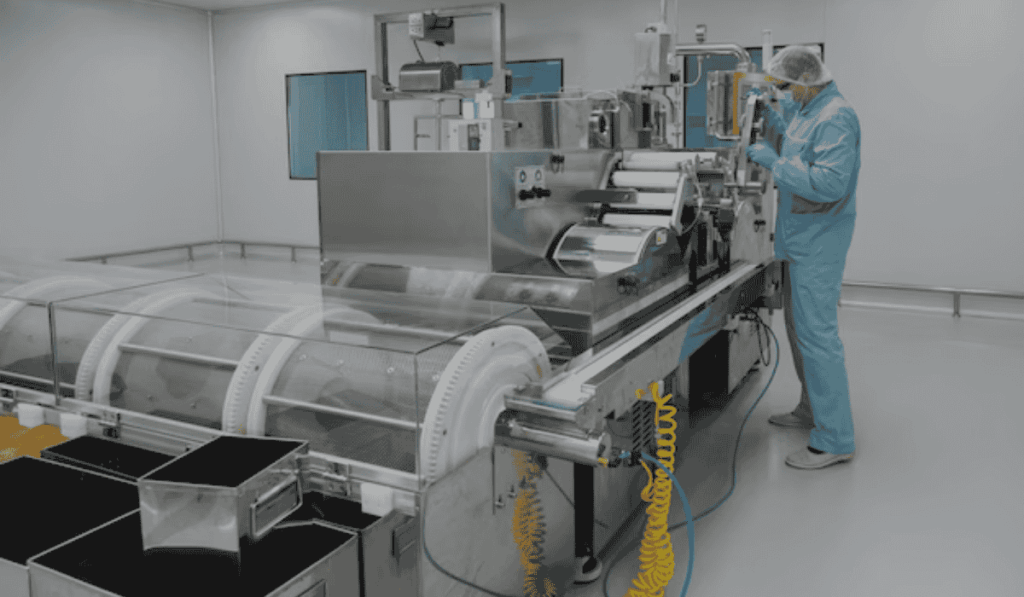
Advanced impregnation machines are central to this process. They provide the mechanical accuracy needed to regulate injection parameters consistently across production runs.
Their design prioritises repeatability, ensuring that output remains stable even under high-volume conditions.
Enhancing Downstream Compatibility
Paper treated through injection methods performs more predictably during cutting, pressing and bonding. This predictability reduces waste during later stages of manufacturing.
Improved compatibility supports smoother workflows and fewer production interruptions.
Quality Control and Monitoring
Injection systems allow real-time monitoring of process variables such as flow rate and absorption levels. This visibility enables rapid adjustment when deviations occur.
Enhanced monitoring supports compliance with quality benchmarks and customer specifications.
Environmental and Safety Considerations
Precise application reduces excess chemical handling and runoff. This containment supports safer working environments and lowers environmental impact.
Efficient systems align with evolving regulatory expectations without compromising output.
Durability and Longevity of Treated Paper
Injection-treated materials often exhibit longer service life. Improved internal bonding reduces degradation under stress or exposure.
Longevity enhances value for end users and strengthens manufacturer reputation.
Adaptability to Innovation
As formulations evolve, injection systems adapt more easily than rigid processing methods. Adjustments can be made through calibration rather than mechanical redesign.
This adaptability supports ongoing innovation in treated paper products.
Scalability Without Complexity
Injection impregnation scales efficiently. Increased output does not require proportional increases in complexity, allowing manufacturers to grow capacity without exponential cost increases.
Scalable systems support long-term planning and investment confidence.
Competitive Advantage Through Consistency
Consistency differentiates suppliers in industrial markets. Reliable output builds trust and reduces downstream quality checks for customers.
Injection impregnation strengthens this consistency, reinforcing competitive positioning.
Training and Operational Simplicity
Modern systems are designed for intuitive operation. Clear controls and automation reduce training time and operational errors.
Simplified operation supports workforce efficiency without sacrificing precision.
Reduced Maintenance Disruption
Well-designed injection systems prioritise durability and ease of maintenance. Predictable wear patterns simplify servicing schedules.
Reduced downtime contributes directly to overall productivity.
Supporting Customisation at Scale
Customisation often conflicts with efficiency. Injection impregnation bridges this gap by allowing parameter changes without halting production.
This balance supports tailored solutions alongside high-volume output.
Strengthening Manufacturing Reliability
Reliability is cumulative. Each consistent process reduces overall system risk. Injection impregnation strengthens this reliability by standardising a critical treatment stage.
Reliable processes underpin sustainable manufacturing growth.
Aligning With Industry Standards
Injection-treated materials often meet stringent technical standards more easily due to their uniform properties.
Alignment with standards simplifies certification and market access.
Future-Proofing Paper Manufacturing
As applications become more demanding, processing methods must evolve. Injection impregnation represents a forward-looking solution aligned with performance-driven markets.
Future-proof systems protect investments and support long-term relevance.
Final Perspective
Injection-based impregnation has become a cornerstone of modern paper manufacturing, offering precision, efficiency and adaptability that traditional methods struggle to match. By ensuring uniform treatment, reducing variability and supporting scalable production, these systems strengthen both product quality and operational reliability. A well-designed impregnation plant enables manufacturers to meet evolving performance expectations without sacrificing efficiency. At Ambica Industries, this approach reflects a commitment to engineering solutions that support consistent output, flexible manufacturing and long-term process stability across treated paper applications.