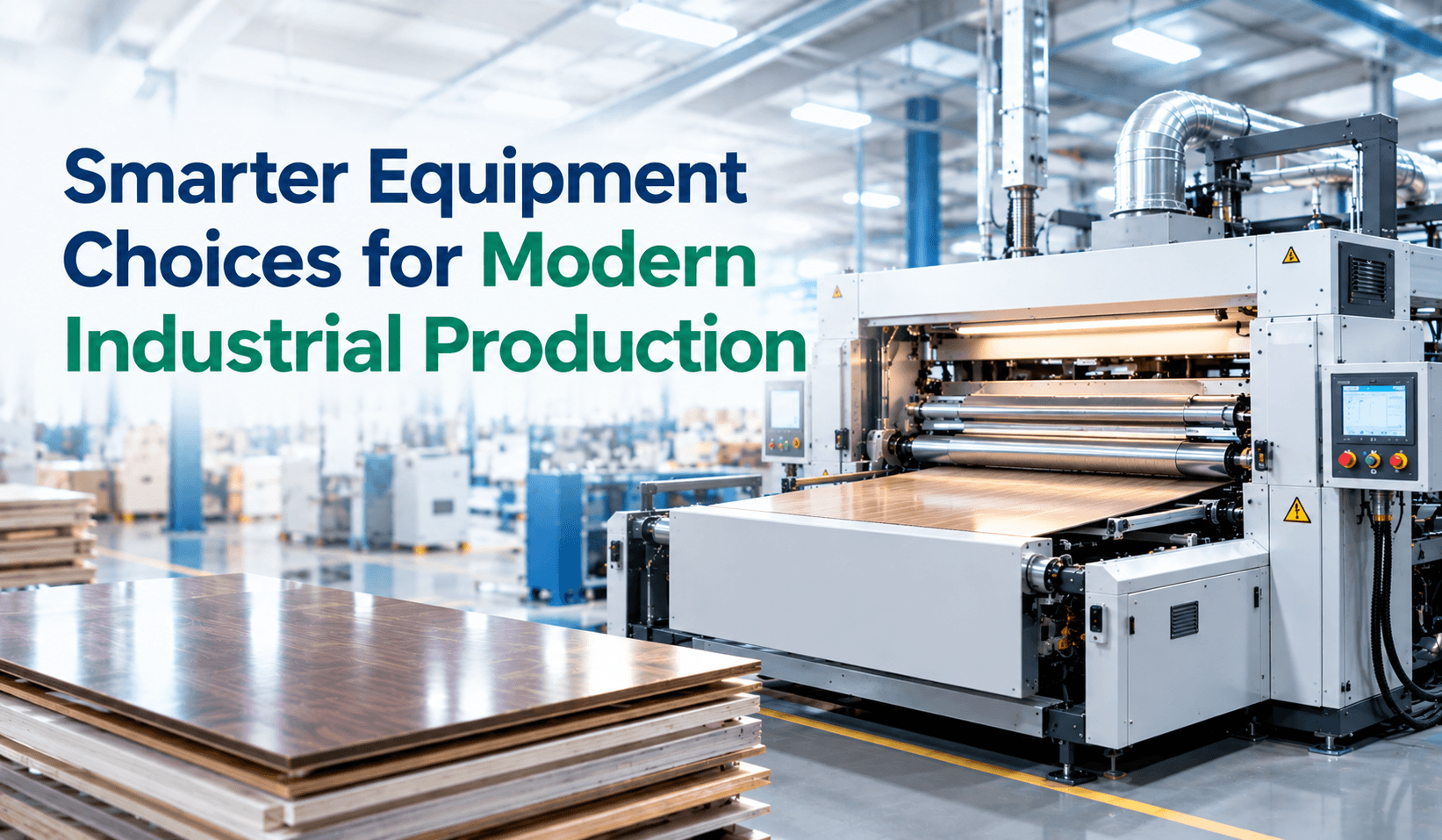
Modern production environments increasingly depend on equipment that can deliver consistent results while adapting to demanding material and process requirements. For manufacturing and engineering industries, selecting the right machinery is therefore not simply a matter of comparing capacity or specifications. It requires an understanding of the complete production process, operating conditions, maintenance needs, and long-term performance. Ambica Industries approaches industrial equipment with this broader perspective, making it important for buyers to assess both technical suitability and practical usability before investing.
Understanding the Role of Specialized Industrial Equipment
Industrial machinery often performs a specific stage within a much larger manufacturing process. Its effectiveness depends on how well it integrates with upstream materials, downstream operations, and quality requirements.
For example, equipment used for treating, coating, drying, or processing industrial materials may need precise control over temperature, speed, tension, pressure, or material flow. Small variations can influence consistency and create challenges later in production.
A well-planned system should therefore offer:
- Stable and repeatable operating conditions
- Appropriate controls for critical process variables
- Compatibility with the intended raw materials
- Efficient material handling
- Practical maintenance access
- Scope for future process requirements
Understanding these factors before selecting machinery can help manufacturers avoid costly adjustments after installation.
Choosing the Right Impregnation Equipment
Specialized impregnation machines are designed for processes where a material needs to be treated with a resin, compound, or other substance under controlled conditions. Their configuration can vary significantly depending on the substrate, treatment material, production volume, and desired finished properties.
A buyer should examine more than the machine’s stated output. Process consistency is equally important. Factors such as application method, drying capacity, temperature management, web handling, and line speed can affect the quality of the finished material.
| Selection factor | Key consideration |
| Material characteristics | Thickness, width, absorbency, and substrate behaviour |
| Treatment material | Viscosity, temperature sensitivity, and curing requirements |
| Production rate | Required throughput and operating speed |
| Process control | Monitoring and adjustment of critical parameters |
| Maintenance | Accessibility, cleaning, servicing, and component life |
| Integration | Compatibility with existing production stages |
This evaluation helps ensure that equipment is selected according to actual production requirements rather than based solely on headline specifications.
Balancing Performance With Operational Practicality
High-performing machinery must also be practical for everyday operation. An advanced system can become difficult to manage if operators cannot easily monitor important parameters or maintenance requires excessive downtime.
User-friendly controls can make a significant difference in maintaining repeatable production conditions. Clear settings and accessible monitoring points allow operators to identify deviations earlier and respond appropriately.
Energy consumption is another consideration. Heating and drying stages can represent an important part of operating costs in many industrial processes. Buyers should examine the efficiency of the overall system rather than considering individual components in isolation.
Safety should remain central throughout the evaluation. Guarding, temperature management, emergency controls, operator access, and appropriate working procedures should be considered alongside production performance.
Evaluating Engineering Expertise Before Installation
Equipment selection becomes more reliable when technical discussions begin with the application rather than a predetermined machine configuration. A supplier should understand the material, expected production conditions, quality objectives, and limitations of the manufacturing environment.
Companies such as Genest Engineering illustrate why engineering expertise can be an important consideration when evaluating specialized industrial equipment. Buyers should look for technical discussions that address the complete process and identify potential operational challenges before commissioning.
Useful questions to raise with a prospective supplier include:
- Which process parameters require the closest control?
- How will the equipment accommodate different material specifications?
- What commissioning support is available?
- Which components require regular maintenance?
- Can the configuration be adapted if production requirements change?
- How will operators be trained to use the system effectively?
These discussions can reveal whether a proposed solution is genuinely suited to the application.
Making a Better Long-Term Investment
The initial purchase price is only one part of an equipment investment. Total ownership considerations can include installation, energy consumption, consumables, maintenance, operator training, downtime, and eventual upgrades.
Before making a decision, manufacturers can compare shortlisted systems using consistent criteria. A practical assessment should cover technical performance, reliability, ease of operation, serviceability, integration, and expected operating costs.
It is also worthwhile to document current production challenges. Identifying issues such as inconsistent output, excessive manual intervention, material waste, or inefficient drying can help establish clear objectives for the new equipment.
FAQs
What should manufacturers consider when buying specialized machinery?
They should assess process requirements, material characteristics, production capacity, controls, maintenance, safety, integration, and long-term operating costs.
Why is process control important?
Consistent control of variables such as temperature, speed, and material flow can help maintain predictable production quality and reduce process variation.
Is production capacity the most important specification?
Not necessarily. Capacity needs to be considered alongside process consistency, material compatibility, energy requirements, maintenance, and integration with existing operations.
What role does engineering support play?
Technical support can help identify appropriate configurations, anticipate process challenges, assist with commissioning, and support operators after installation.
How can businesses compare different equipment options?
Using a consistent evaluation framework covering performance, operating costs, maintenance, safety, flexibility, and lifecycle considerations makes comparisons more meaningful.
Conclusion
Selecting industrial equipment requires a balance between technical performance and real-world operating needs. Understanding the material, process, production objectives, maintenance requirements, and future scalability can lead to more informed purchasing decisions. Well-planned manufacturing engineering solutions should ultimately support dependable operations without creating unnecessary complexity. For buyers, the most useful approach is to evaluate the entire production requirement and choose equipment that delivers practical value throughout its working life.
No comment