As industrial materials become more advanced, manufacturers require production systems that deliver accuracy, efficiency, and dependable quality. Paper treatment technology plays a significant role in producing materials used for laminates, insulation products, decorative surfaces, and engineered panels. Selecting a reliable paper impregnation line manufacturer is an important step toward achieving consistent resin application, stable production, and optimized material utilization. Modern production lines are designed to improve workflow, reduce process variations, and support continuous manufacturing, enabling businesses to meet demanding quality standards while maintaining operational efficiency across diverse industrial applications.
What Makes a High-Performance Production Line?
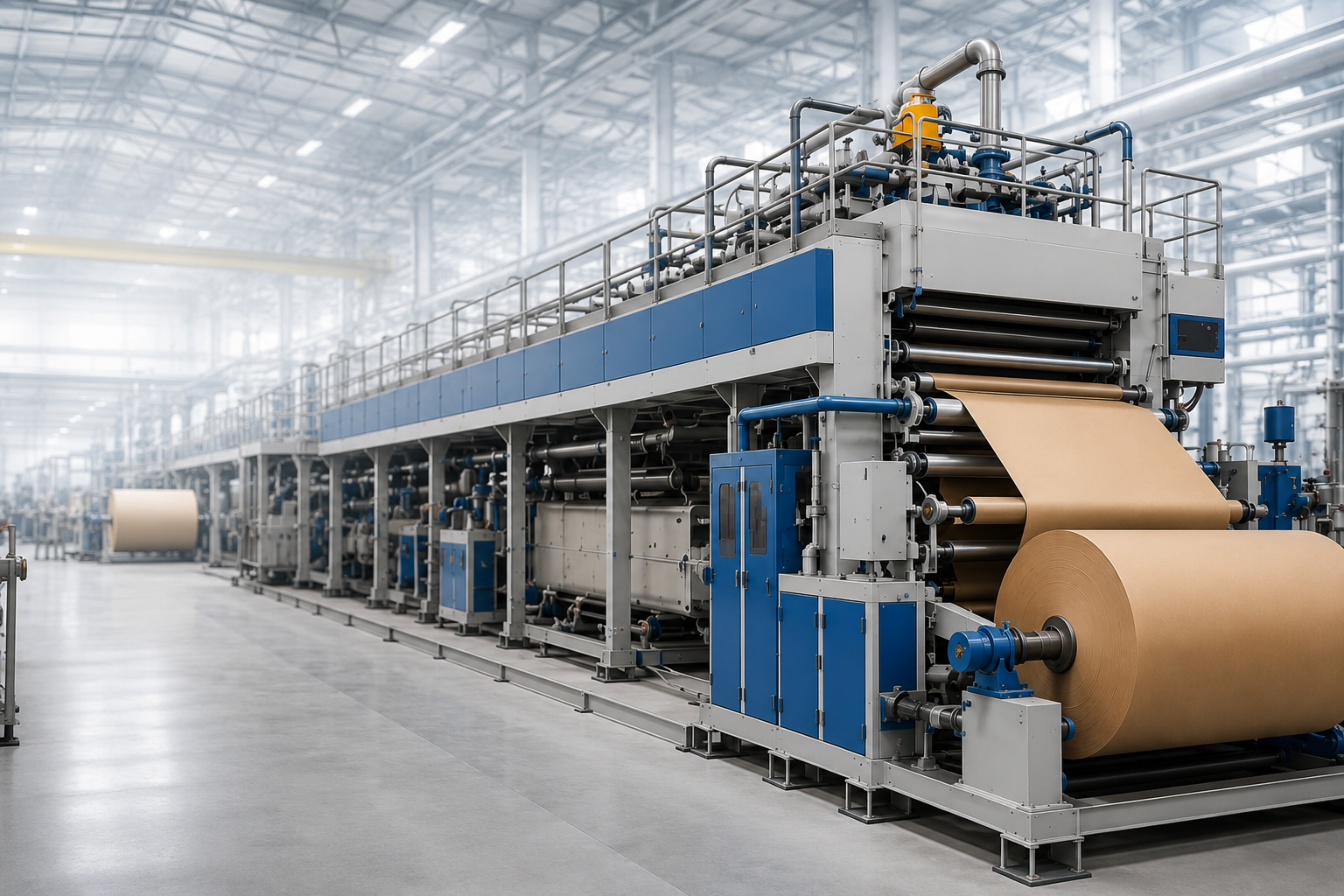
The effectiveness of a production line depends on how well each stage of the process works together. From material feeding to drying and winding, every operation must function with precision to maintain product consistency.
Key characteristics of an efficient line include:
- Stable material handling
- Accurate resin application
- Uniform drying performance
- Continuous quality monitoring
- Flexible production settings
- Easy maintenance access
These capabilities help manufacturers reduce production interruptions while maintaining reliable output across different paper grades and resin formulations.
Why Paper Impregnation Requires Process Precision
Successful paper impregnation depends on controlling every stage of the manufacturing process. Small variations in resin distribution, drying temperature, or paper tension can affect the quality of the finished product.
| Process Stage | Main Objective | Quality Indicator |
| Paper feeding | Smooth material movement | Consistent paper alignment |
| Resin treatment | Even resin penetration | Uniform saturation |
| Drying section | Controlled moisture removal | Stable curing results |
| Cooling stage | Product stabilization | Dimensional consistency |
| Final winding | Safe roll collection | Neat finished rolls |
Carefully managing each production stage improves repeatability while reducing defects and unnecessary material waste.
How Automation Improves Manufacturing Efficiency
Modern production facilities increasingly rely on automation to improve process reliability and operational control. Automated systems reduce manual intervention while allowing operators to monitor production more accurately.
Automation offers several practical advantages:
- Faster production adjustments
- Improved process consistency
- Better production monitoring
- Reduced material losses
- Higher operational safety
- Simplified quality control
These improvements help manufacturers achieve greater productivity while maintaining stable manufacturing conditions throughout long production cycles.
Engineering Excellence in Modern Manufacturing
Companies such as Ambica Industries recognize that efficient production systems are built on precision engineering and continuous process improvement. Modern manufacturing equipment is designed not only to increase production capacity but also to improve long-term operational stability.
Well-engineered production lines support industries including:
- Decorative laminate manufacturing
- Electrical insulation production
- Furniture surface materials
- Industrial composite manufacturing
- Architectural panel production
- Specialty paper processing
By focusing on reliability and adaptability, advanced production systems help manufacturers respond to changing market requirements with greater confidence.
Planning for Sustainable Industrial Growth
Long-term manufacturing success depends on selecting equipment that supports future expansion while maintaining efficient day-to-day operations. Production systems should be evaluated based on both current needs and future manufacturing goals.
Manufacturers can strengthen long-term performance by focusing on:
- Preventive maintenance planning
- Energy-efficient operations
- Operator training
- Continuous process evaluation
- Equipment scalability
- Ongoing quality improvement
A proactive strategy allows businesses to maximize equipment performance while supporting sustainable production growth over time.
Frequently Asked Questions
1. What is the purpose of a paper impregnation line?
It processes paper with resin treatment, controlled drying, and finishing operations to produce materials suitable for industrial applications.
2. Why is process control important during impregnation?
Accurate process control helps ensure consistent resin distribution, stable product quality, and efficient production.
3. Which industries use impregnated paper products?
They are commonly used in laminate manufacturing, electrical insulation, furniture production, construction materials, and engineered composite applications.
4. How does automation improve production lines?
Automation enhances monitoring, increases efficiency, reduces manual errors, and improves production consistency.
5. What should manufacturers consider before investing in production equipment?
They should evaluate production capacity, flexibility, maintenance requirements, energy efficiency, automation features, and long-term operational goals.
Conclusion
Modern manufacturing depends on precision equipment that delivers consistent quality, efficient production, and long-term reliability. Investing in advanced paper impregnating solutions enables businesses to improve operational performance while meeting evolving industry requirements. Well-designed production systems support higher productivity, better resource utilization, and dependable manufacturing outcomes. Ambica Industries continues to recognize the importance of engineering-driven technologies that help manufacturers achieve consistent quality, operational efficiency, and sustainable industrial growth.